
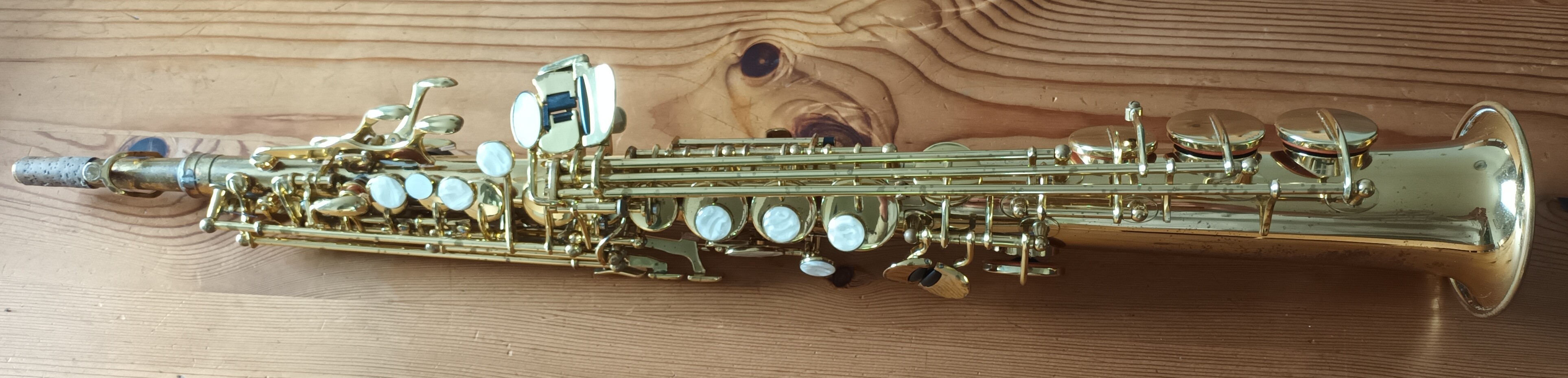
Soprano Sorrow - A tale of a budget price soprano saxophone
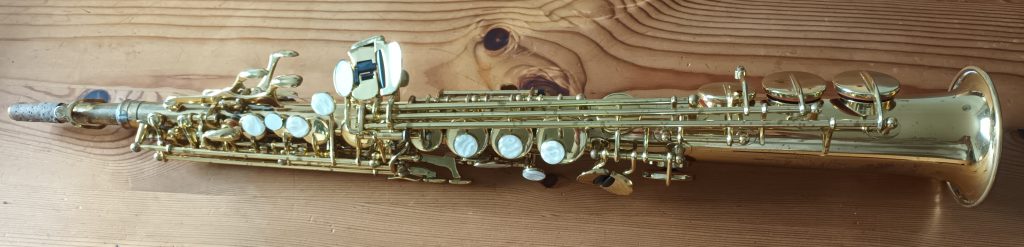
Sometimes I buy a saxophone which needs repairs because I need to practice and keep my skills together especially after time spent doing other things.
I found one which had been dropped so it needed the bell reshaping and a service. It is a Rosetti Series 5 and apart from the dents and regulation issues, looked like it could be playable after the work was completed. Its the type you will see often in online stores, the lowest price soprano with two necks.
The repair work went well, the dog-eared bell and dents went back into shape with a few tiny tell-tales left at the end. A few posts needed tapping back into line and the pads sealed easily. It all looked good, I was expecting good things...
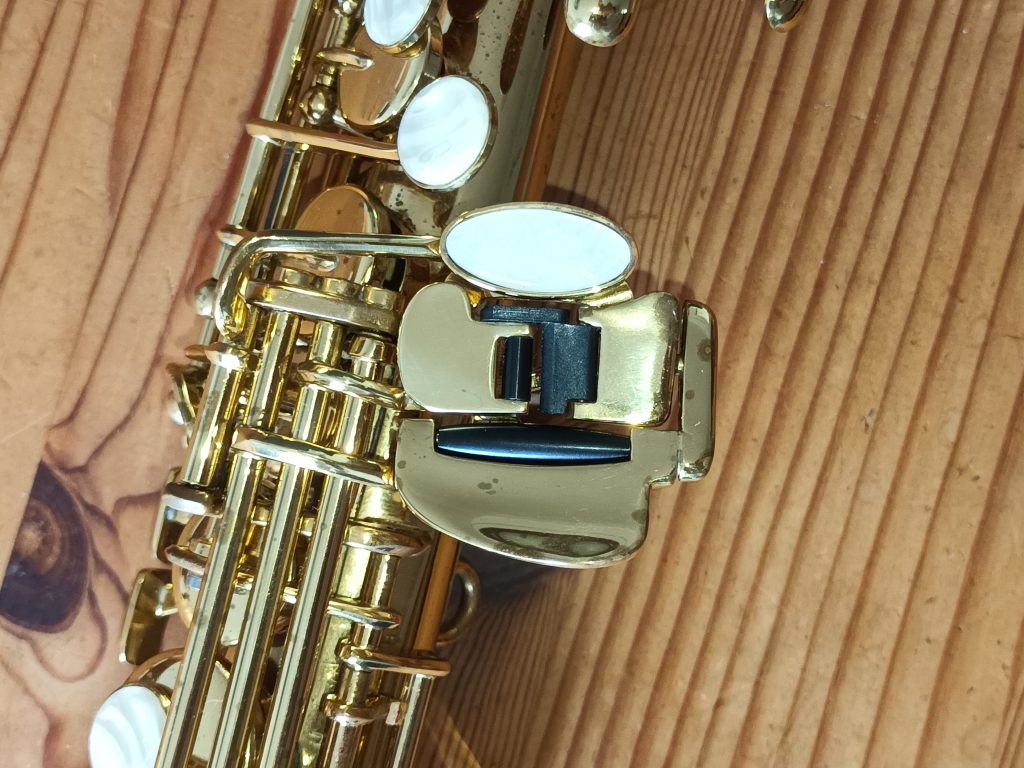
Then I play-tested it. Oh dear. A dull honk was emitted. It feels like its leaking but I just serviced it, all pads seal and the neck fits. I pressed a few pads at the top of the horn and the sound cleared up. It was the top F# pad. It was not held down strongly enough.
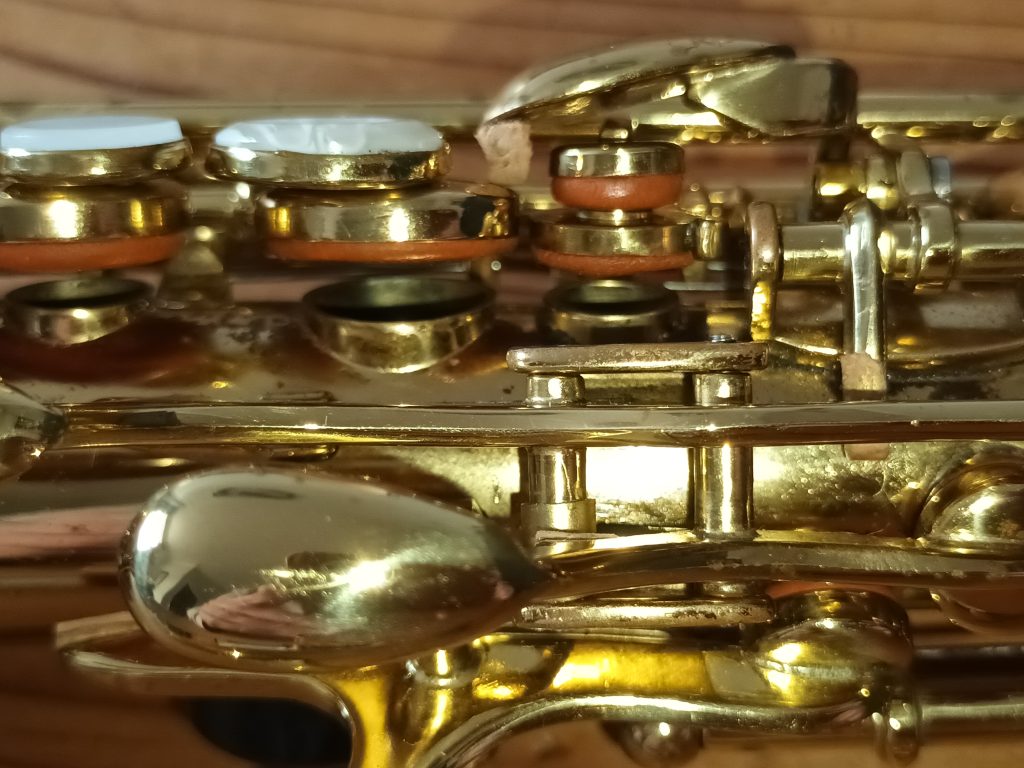
This is a common problem, the top F# key is held down by indirect pressure from a spring on the rod with the touch key.
It made the horn unusable with bad tone and intonation. There is a fix; add a spring to a nearby post and use it to directly push the pad down. There was a notch on the keywork anyway so it looked like the natural thing to do.
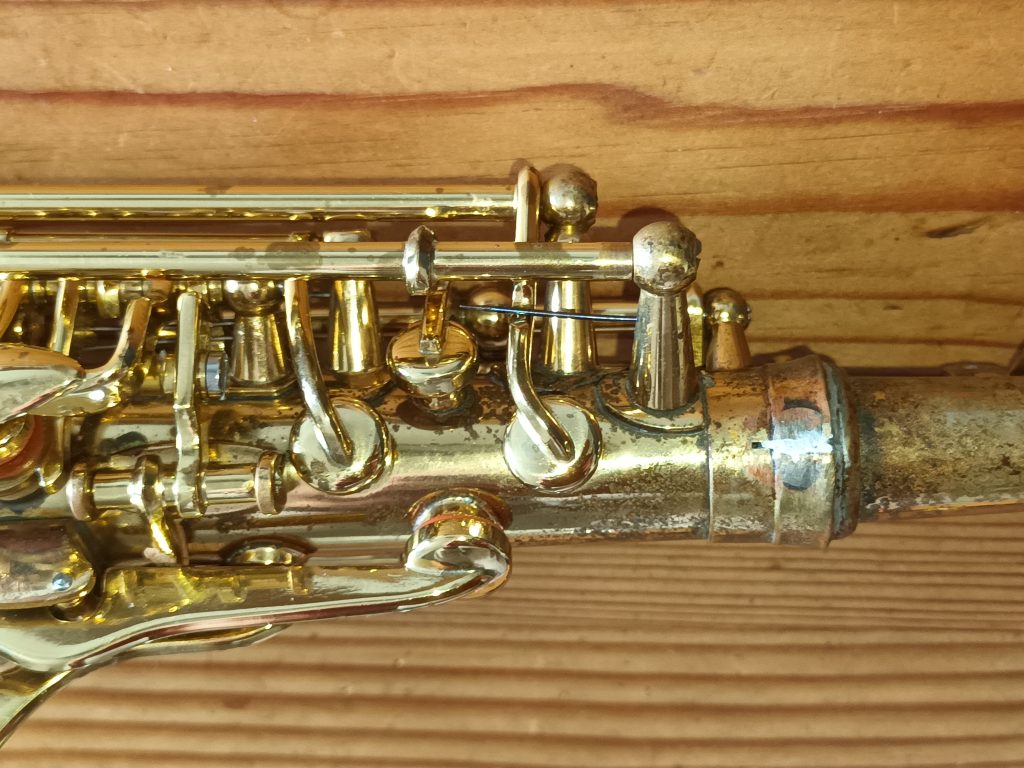
Problem solved! The tone was much improved and intonation was good. Just a few adjustments to voicing when playing made even the palm keys sing out.
After a few days practising, the dull tone and tuning problems appeared again.
This time it was the neck tenon. It was leaking badly even though it had been fixed earlier. This is the most common problem on all budget saxophones, the necks don't fit well so they leak. It causes all sorts of problems with tuning, tone and response.
A leaky neck has all sorts of symptoms, from a dull thin tone to low notes not working. Smaller leaks in the tenon prevent the palm keys from speaking, usually they blow so flat the notes will not sound.
I went to adjust the tenon again and noticed the metal was very soft. It happens when metal has been 'stressed'. There was no way the tenon would hold its shape any more and repeatedly putting it into the body made it lose its shape.
The only solution here was to solder the straight neck onto the horn.
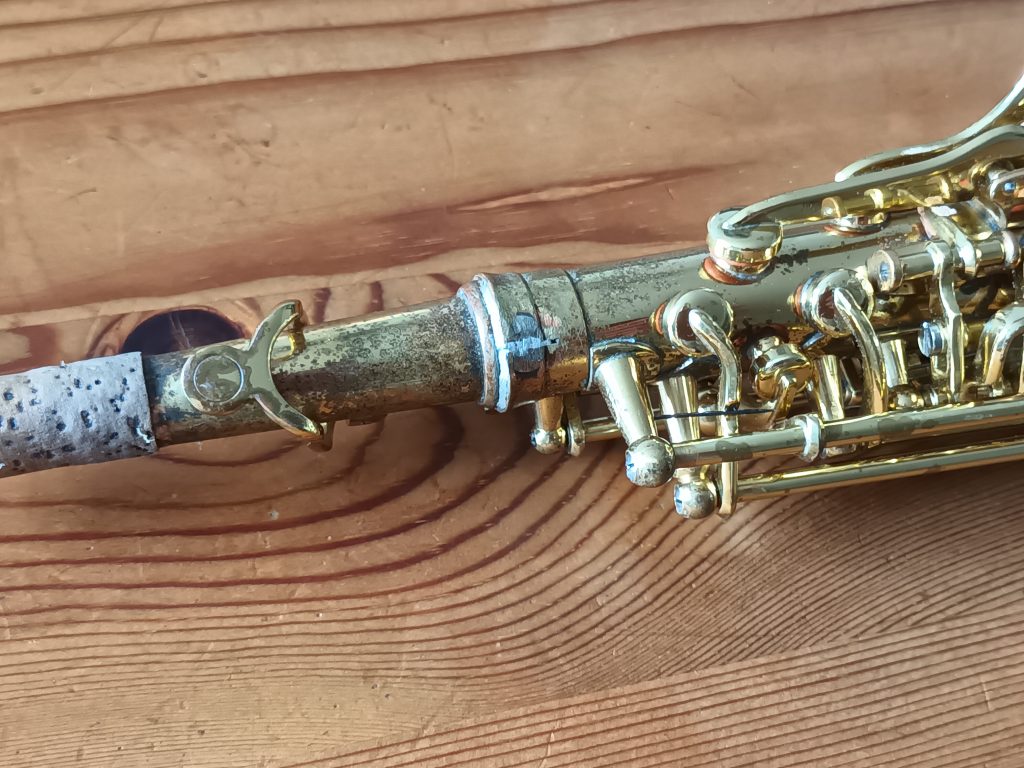
It worked! The horn played well, intonation is controllable and the tone is dark and ringing.
You are probably wondering what the rest of the horn is like.
It does have a good specification. The upper stack has adjustment screws and the general build quality was acceptable. After rebuilding and fixing the issues, it plays well enough for performance.
Would I recommend this kind of soprano as a good used purchase? No I cannot as the F# and neck tenon problems would make it unplayable. I can predict this would be a recurring problem on all similar soprano saxophones at any price. If it was one piece (no removable neck) and in good order, it should be adequate for doubling.
If you are wanting a soprano saxophone, a used or new one without a detachable neck and optionally without a top F# (and G) key should give reliable performance.