
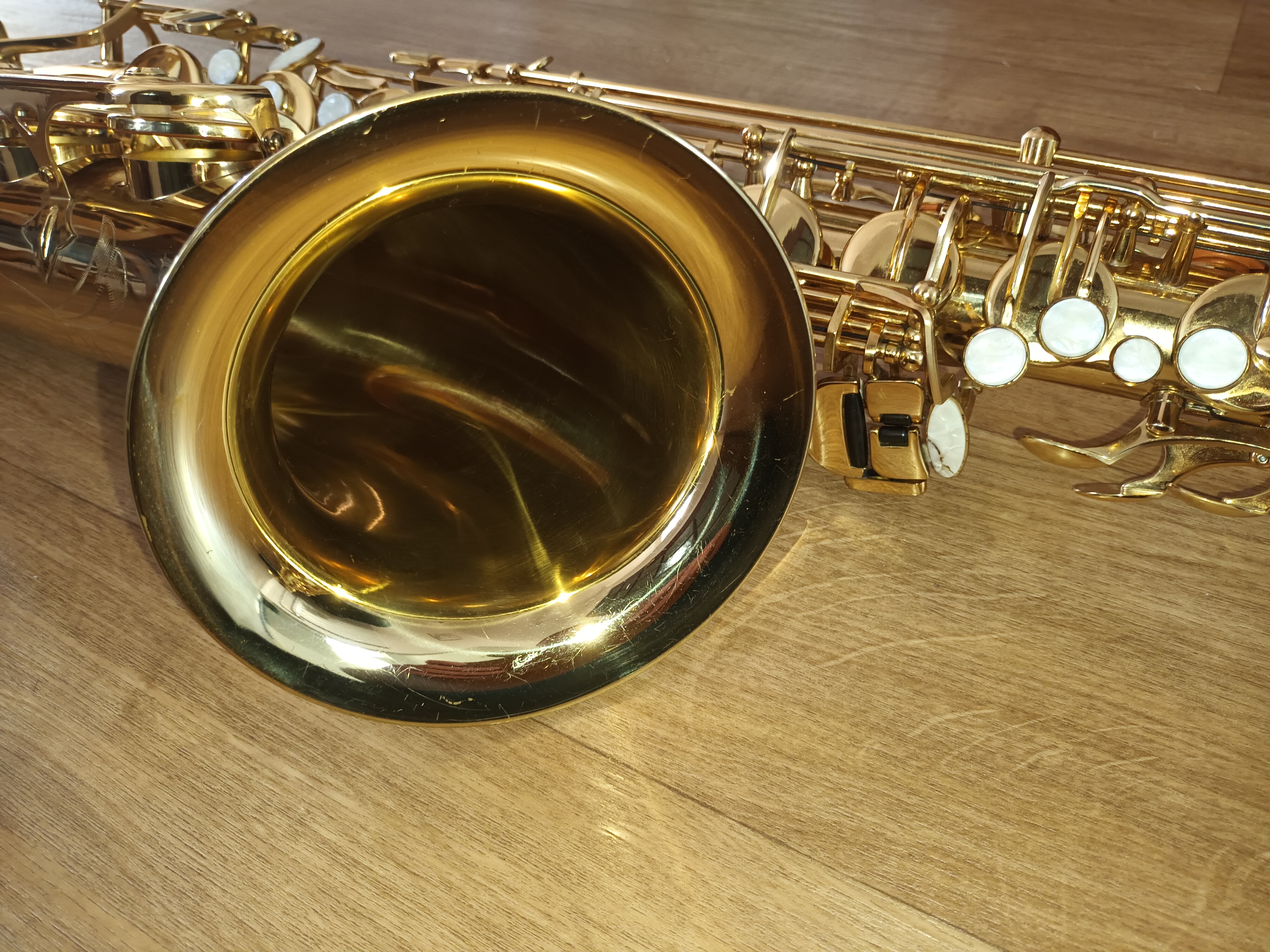
Why are saxophones so expensive?
This is a frequently searched term so I thought it best to write an article on the subject.
In short, saxophones are not expensive if you shop wisely. There are plenty of good usable instruments available at all price points.
How they are made affects cost
The manufacture of saxophones requires a lot of manual labour and specialist machinery. There are precisely placed tone holes drawn up though a brass tube and each key and pad cup needs a specific assembly jig so it can be soldered accurately. The final assembly and finishing requires a level of specialist skill to ensure good quality. To give an indication of how much labour is needed, it takes me around three working days to tear-down, clean and rebuild a saxophone to a high standard. Manufacturer Château based in Vietnam state on their website that it takes around a week to build each instrument.
Compared to other popular instruments like electric guitars or electronic keyboards, the manufacturing complexity is a lot higher.
The labour time needed to assemble a saxophone is the main driver of cost.
Where they are made
Many of the premium brands are made in countries with high living costs. Henri Selmer is based near Paris France, Keilwerth in Germany, Yamaha and Yanagisawa are made in Japan.
These companies also have factories in People's Republic of China, Taiwan, Indonesia and elsewhere in Asia. These factories produce the bulk of instruments because they traditionally have had lower living costs. They also have excellent and flexible manufacturing capabilities. This is ideal for musical instruments where small batches with different branding can be produced efficiently. The higher specification instruments being made in Asia have been good quality for over twenty years now. Even the entry level ones are much better than ones produced in the late 1980's.
Some saxophones are overpriced
Yes, the Mark VI Selmer is overpriced. Because so many great players used one and its in every photo album cover from the 1950's. It became popular because it was slightly cheaper than the favourite at the time which was the King Super 20. Based on price lists at the time, the Mark VI would have cost around $455 USD* and the Super 20 $500 USD*. A significant saving given the average weekly pay in 1955 in USA was $65 USD per week!
It also had a very long production run from the mid-1950's to early 1970's. This means there are plenty of them around. Unless there is some documented provenance such as being played by a notable professional or military band where the instrument would have been looked after well it is not good value for money. However, they are well made and have history so I would value them around the same as a new Yamaha 62.
Older saxophones like Conn New Wonder tend to fluctuate in price which tends to rise if there is a popular player using one.
* value from publications on saxophone.org
Ways to buy a saxophone on a budget
Use the VAT free scheme
If you live in the United Kingdom and you are studying music at school or university, you might be able to buy your instrument VAT free. That is a 20% saving! Ask your school if they follow the Assisted Instrument Purchase (AIP) scheme. Usually its tied to a specific local shop. Its a great way to make it affordable to buy a higher quality instrument like a Yamaha, Trevor James, Buffet and Crampon or higher specification Jupiter. The school may even be able to facilitate a low rate loan.
Rent via school or shop
You may be able to rent a good quality instrument from your school, local shop or even online. If it does not work out, you can return it and stop paying. If you do like the instrument it may be possible to buy it at a reduced price. This should be the better option for most school students in their first year since they may change their mind about their musical aspirations.
Buy Used
I don't mean buy the cheapest from an auction website. I mean buy a refurbished and serviced instrument from a retailer who has a woodwind department or specialises in saxophones. You should be able to get a good instrument this way from a retailer who knows which brands are good quality and suitable for students.
Finance if you can afford it
If you are fully committed to the saxophone and are at a level where you need a professional level instrument you may have to finance it. Just make sure you can afford the monthly payments. Also beware of retailers who inflate prices so you have to buy on finance. They get commission for each loan so always shop around for the lowest rates and flexible repayment options. Be mindful that most saxophones depreciate very quickly so stick with popular brands which hold their value such as Yamaha, Yanagisawa, Selmer Paris and Keilwerth. Newer premium brands like P. Mauriat, Eastman & Signature Custom have not been around for long enough to judge if they will hold their value well.
Summary
Saxophones require a lot of manual labour and specialist machinery in their manufacture so they will be more expensive than a guitar or keyboard.
Some vintage saxophones are overpriced and the cheapest instruments are often made very quickly and will not be reliable.
You do not have to buy a new one and there could be rental and purchase options for students.
If you set an affordable but realistic budget, you should be able to find something suitable. A realistic budget of around the same price as a games console should get you a good alto or tenor saxophone. If you want a soprano or baritone saxophone, you will need to spend almost double as these are difficult to make because of size.